

Primary Fruit Aromas & Flavors
“Primary” notes are the aromas and flavors immediately present after the grapes are fermented. The fresh fruit, herbs and flower notes will be more prominent in a “younger” wine, and fade as a wine ages.

White wines in cooler climates will display more green and citrus fruits, like a Sauvignon Blanc from Northern France that tastes like pears and lemons. The cool temperatures make these grapes higher in acidity and lower in ripeness. On the contrary, white wines from warmer climates, like Chardonnays grown in California’s hot Central Valley, will display more stone and tropical fruits due to the heat and ripeness the berries developed in the heat.
Red wines in cooler climates will accentuate more red fruits, like a Pinot Noir from northern Oregon. However, a Shiraz from a hot Australian region will display jammier black fruits and even dried/cooked fruit flavors due to the riper grapes.
Some wines also display floral, herbaceous, herbal and spicy notes as they promote the unique qualities of the grape.

Secondary Aromas & Flavors
“Secondary” notes are the aromas and flavors that are present following specific wine-making processes, i.e. Malolactic Conversion/Fermentation (MLF) which converts the grape’s harsh malic acids into soft lactic acids. A “buttery” Chardonnay will display notes of bread, cream an cheese after MLF.
Wines that spend time in oak may display additional flavors of spice, chocolate, cedar, etc. due to the influence of the wood. New oak barrels will have a stronger oak impact than reused or old barrels. An oaked Pinot Noir may taste heavier, spicier, or complex than one that spends no time in oak.

Tertiary Aromas & Flavors
A small percentage of wines have the ability to age and develop even more interesting characteristics over an extended period of time. As wine ages in the bottle, the primary and fresh fruit aromas and flavors are replaced by “tertiary” characteristics.
Wines that experienced deliberate oxidation (i.e. barrel-aged wines that are exposed to small amounts of oxygen over time), will develop sweet notes of chocolate, spices, coffee, butterscotch, etc.
Bottle-aged red and white wines will begin to display more “earthy” or dried notes. For example, white wines may display petroleum or kerosene notes, and red wines may taste of leather and game.

Wine acidity refers to the natural malic and tartaric acids found in grape pulps. When you think of acid, think about that acidic taste found in lemons, limes and grapefruit. Acid is what makes both fruits and wines refreshing. Sometimes these harsh acids are transformed into lactic acid later in the winery to achieve a softer, creamier taste. However, acid plays an extremely important role in a wine’s final taste.

Some wines are naturally more acidic than others. For example, Sauvignon Blanc and Pinot Noir grapes will be more acidic than Viognier and Pinotage. Grapes used for Champagne or Sparkling wine will have an extremely high acidic level to tolerate the autolytic processes and remain balanced. Here are a few other examples:

Acidity & Climate
In most cases, grapes grow between 30° and 50° latitude. This covers much of Europe and the U.S., as well as the southern tips of South America, Africa and Australia. There are a lot of climate variations within those grape-growing boundaries. In the Northern Hemisphere, climates will be cooler north and warmer south. On the contrary, the southern hemisphere will experience cooler climates the further south you go.

Sun and heat are essential to ripen grapes. The more sun and heat the vines receive, the riper the grapes become. Generally speaking, grapes grown in cooler climates will have higher acidity levels because the grapes lack the intense sun and heat needed to produce the high sugar levels found in warmer climates. For example, a cool-climate Pinot Noir in northern Oregon will taste more acidic than a Pinot Noir that baked in the hot sun of California’s Central Valley.
Acidity & Growing Season
When grape berries form on the vines and begin to produce pulp juice, they have high levels of acidity. As grapes ripen during the course of the growing season, a process known as Veraison, the acidity levels fall and the sugars levels begin to rise. If you were to pick a grape in July and eat it, the tart acids would be very strong and off-putting. However, a grape from that same bunch in October would have less acid and and more sugar. Some grapes, like Riesling, are able to retain their acidity throughout the growing season, giving grape-growers a wider harvest window and more options for different wine styles.

Using specialized instruments and often their own intuition, grape-growers must determine the absolute best time to harvest the berries with their ideal balance of acidity and sugar. For some grapes, the acid decreases so quickly the grape-growers must hurry and pick before it’s too late. Over-ripe grapes will have very little acid, and won’t taste very refreshing. In these cases, they may have to be later blended with more acidic wine for a balanced taste. In other cases, grapes are purposely left on the vine to produce sweet wine styles with lower acidity.
Acidity in the Winery
Once grapes arrive in the winery, a wine-maker will have to work with the grapes’ acidity and sugar levels in order to create the final style of wine they want. In some warmer regions, wine-makers are permitted to add acid to their wine to make it more balanced. This practice, known as acidification, is outlawed in many wine-growing regions.
It All Comes Down to the Final Taste!
Similar to how lemonade works, wine needs have the right amount of acid in order to feel balanced and refreshing! Wines with too much acidity will taste tart or sour. Wines with too little acidity will taste flabby. Wine-makers must find the perfect balance so that we enjoy the final product.
Acidity cannot be detected by smell. We must taste the wine in our mouth in order to gauge its acidity level. The taste buds in our mouth responsible for detecting acidity are found on the sides of our tongue. A wine with higher levels of acidity will cause that acidic taste to linger on our tongue much longer than one that has little acid.

White Wines
White wines run on a color scale between lemon-green and brown. Fresher, or newer, grapes will make a wine closer to its original color of juice, which will be clear, or a have a slight yellow tint. Most white wines fall in the category of “lemon.”
There are several factors that cause white wines to develop darker hues:
Prolonged Skin Contact: Clear grape juice soaked with its golden skins
Wine-Making Techniques: Malolactic Conversion, blending or oak-aging
Oxygen: Wine deliberately exposed to oxygen over time
Age: The loss of vibrant color, leading to browning over time

Rosé Wines
Rosé wines run on a color scale between light pink and orange. In most cases, the pinker or darker a rosé, the more color and flavor extraction it has. However, it is important to note that the color is not a reflection of quality. Some of the most prestigious expressions are very light in color.
The amount of “red” displayed in the wine can be indicative of several factors:
Direct Press: Black grapes are gently pressed so as to add minimal color to the wine
Short Maceration: Black grapes soak on their skins for several hours for more color
Other Factors: Blending or oak-aging
Oxygen: Wine deliberately exposed to oxygen over time
Age: The loss of vibrant color, leading to “orangier” hues over time

Red Wines
Red wines run on a color scale between purple and brown. Fresher, or, newer, wines still have their inky purple hues, and darken in the winery over time. Most red wines are classified as “ruby.” One the most important color factors is the color of the actual grape. For example, Pinot Noir and Nebbiolo are more red in color, whereas Malbec was once nicknamed “black wine.”
There are several factors that can cause a red wine to develop darker or browner hues:
The Grape: The original shade and hue of the grape
Wine-Making Techniques: Blending or oak-aging
Oxygen: Wine deliberately exposed to oxygen over time
Age: The color will fade over time and develop a browner hue

Color Intensity
Another factor to consider when assessing a wine’s appearance is the color intensity. Some wines will display a pale, or lightly colored hue, whereas others are more pronounced. Please note, the intensity of color is not indicative of a wine’s quality. For example, some of the most
outstanding wines, i.e. Barolo, are on the paler side and deceptively robust in intensity. Other wines are so deep in color that you cannot even see the glass stem.

Tannin in Grape Skins, Seeds & Stems
Tannins are not a flavor. Rather, they are polyphenols (astringent chemical compounds) found in grape skins, seeds and stems. They are also found in fruits, veggies, wood, leaves, bark, and a plethora of other livings plants. The compounds result in a cottony mouthfeel when we eat grapes or drink wine.
The best way to understand how tannin influences grapes or wine is to peel the skin off of a black table grape and put it in your mouth, without the juicy pulp. When you chew the skin, you should be able to feel the cottony effect of tannin on your teeth and around your mouth.
Most black grapes are fermented with their skins, allowing the tannin to soak into the wine. However, a winemaker may also choose to add the grape seeds and stems to the must to further extract tannin and flavor compounds. This method may be more common for red wine, but some winemakers also choose to ferment white grapes along with skins, seeds and stems for more complexity.
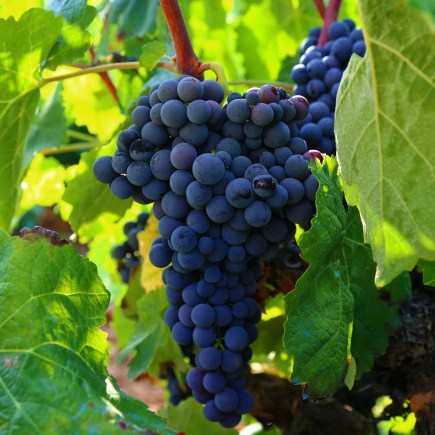
Black grapes have higher levels of skin tannin than white grapes. And even within the black-grape category, all tannin levels are not the same. Cabernet Sauvignon, Nebbiolo, Syrah and Tannat have some of highest tannin levels. Whereas Pinot Noir and Grenache have relatively lower levels. In addition, smaller berries, i.e. Syrah, may contribute even more tannins to a wine due to it’s high skin/pulp ratio.
Here are a few common grapes and their tannin levels:

Any time grapes are fermented with their skins or aged in oak, the tannins make their way into the final product of wine.
Tannin From Oak
As mentioned earlier, tannins are also found in wood and bark. When any wine is aged in an oak vessel, it extracts the natural tannins found in that particular barrel and increases that cottony feel and flavor complexity of the final wine. Keep in mind, barrels lose their impact and impart lower tannin levels each time they are used.

Softening Tannins for Easy Drinking
Even though tannin is present in wood, extended periods of oak-aging helps to soften the natural tannins found in the grapes themselves. If you were to taste a Tannat wine before barrel-aging, the tannins may be so astringent that your lips pucker and the wine isn’t very drinkable. This is why many red wines need to age a bit.
Grape sugar changes into alcohol during fermentation, thereby turning grape juice into wine. If grapes are under-ripe, there won’t be enough sugar to make the alcohol. Let’s start at the beginning.
Grape Sugar
A grape vine requires sunlight, heat, water and nutrients in order to undergo photosynthesis and ripen its berries. Healthy, ripe grapes contain a balanced amount of water, sugar and acid at the time of harvest.

Sugar & Growing Season
When berries form on the vines and begin to develop their pulps, they have low levels of sugar. As grapes ripen during the course of the growing season, a process known as verasion, the acidity levels fall and the sugars levels begin to rise. If you were to pick a grape in July and eat it, the tart acids would be very strong and off-putting. However, a grape from that same bunch in October would have less acid and and more sugar. Using specialized instruments and often their own intuition, grape-growers must determine the absolute best time to harvest the grapes with their ideal balance of acidity and sugar. In some cases, grapes are purposely left on the vine to produce sweet or dessert wines.

Fermentation
When grapes come into the winery, they undergo a process called fermentation, whereby yeasts convert the juice sugars into alcohol. Wild (ambient) yeasts exist naturally on grape skins, stems, and even in the winery itself. A winemaker can choose to use these naturally-present yeasts to complete the fermentation process, or add yeast to the juice (most common). The grape juice temperature must be adjusted to the right setting in order for yeast to begin and continue their job.

Over the course of several weeks, the yeasts consume the grape juice sugar and replace it with Carbon Dioxide and Ethanol (alcohol). Once the yeasts consume all the sugar, they die and are filtered out of the wine. However, if the winemaker were to remove the yeasts before all the sugars were consumed, the wine would remain sweet with lower levels of alcohol.
In some cooler regions where grapes don’t ripen enough to create the amount of sugar needed to make alcohol, winemakers are permitted to add sugar to the grape juice so that more is present for the yeasts to consume. This practice, known as chaptalisation, is outlawed in many wine-growing regions.
ABV Levels (Alcohol By Volume)
Most wines have an ABV rate between 11% and 13.9%. In some cases the rate can be higher. However, the majority of grapes do not have enough natural sugar to exceed an ABV above 15.5%.
There are several factors that impact the final alcohol level:
Natural Sugar Levels: Some grapes naturally produce more sugar, which turns to alcohol
Climate: Grapes in warmer climates generally produce more sugar, which turns to alcohol
Chaptalisation: Sometimes additional sugar is added to the juice to increase the alcohol
Fortification: Some wines include additional spirit or liquor, i.e. Port, which increases the alcohol.

Sweet & Dessert Wines
Now that we understand the relationship between sugar and alcohol, we can focus on wines that are purposely made sweet. Although most wines are fermented dry, there are several ways to either keep wines sweet or increase a grape’s sugar level. Here are some techniques:
Ending Fermentation Early: Yeasts are removed from the juice before they consume all the sugar
Sweetener: Sweet juices are added to the wine after fermentation, making them sweet
Dried Grapes: Grapes are left to dry on the vine or in the winery, which concentrates the sugar
Rotted Grapes: Some grapes are purposely allowed to rot, which concentrates the sugar
Ice Grapes: Some grapes are left to freeze on the vine, which concentrates the sugar.

The amount of sugar present in the final
The secret to food and wine pairing is to find a combination that enhances how a wine tastes. Wine rarely makes a food taste bad, but a bad combination can make a wine taste terrible! Ick! Contrarily, the right dish can make a wine taste 10 times better than it does on its own. There are rules of thumb to follow in order to create wine/food combinations that work in concert.
The best food pairing is one that makes a wine taste juicy, fruity, full and well-balanced. In order to achieve that outcome, you have to find foods and wines that compliment each other.
General Pairing Rules

Sweet Foods: Sweet foods like chocolates, pastries and pies will make most wines (especially dry wines), taste acidic, bitter and astringent in comparison. However, pairing desserts with sweet wines will allow you to enjoy both because they are in the same family, so to speak. Going back and forth between the wine and dessert won’t negatively change the flavors of either. In rare instances, magic occurs, and sweet dishes pair with well dry wines (like some dark bitter chocolates with Cabernet Sauvignon), but some of the pairings are unreliable so try them at your own risk!
Umami/Savory Foods: Think mushrooms and hearty meat dishes. Pairing these foods with the wrong wine can make your vino taste acidic, bitter and astringent in comparison. Savory flavors pair the best with full-bodied, and high-tannin wines.
Acidic Foods: Like desserts, acidic foods pair well with wines in the same family. When thinking about these foods, you must consider the sauce or dressings that they are in, like a garden salad with Italian dressing. Thus, acidic foods should be paired with acidic wines. Going back and forth between the wine and acidic dish won’t negatively change the flavors of either.
Salty Foods: These types of food are a wine’s best friend. In general, salt enhances the fruit flavors of wine and makes them taste sweeter and fuller. Drinking a glass of wine with a bag of salty chips will bring out the wine’s best flavors.
Bitter Foods: Pairing bitter foods like broccoli or arugula with the wrong wine will make your vino taste bitter as well. The best solution is to pair these foods with non-bitter wines in order to bring out the best flavors of each.
Spicy/Hot Foods: Foods with heat will magnify the alcohol in wine. For example, eating a spicy dish with many wines could make your mouth feel like it’s on fire! Instead, you should pair it with a low-alcohol wine below 11% ABV to bring out the wine’s best flavors and to prevent the burning sensation in your mouth.
Here are some examples:


